

Volume I: The Foundations of Vasi Yoga
USD 14.99 per book
View catalogue & order →A five-volume exploration of the yogic philosophy, spiritual disciplines, and wisdom traditions preserved by the Siddhars.
USD 14.99 per book
View catalogue & order →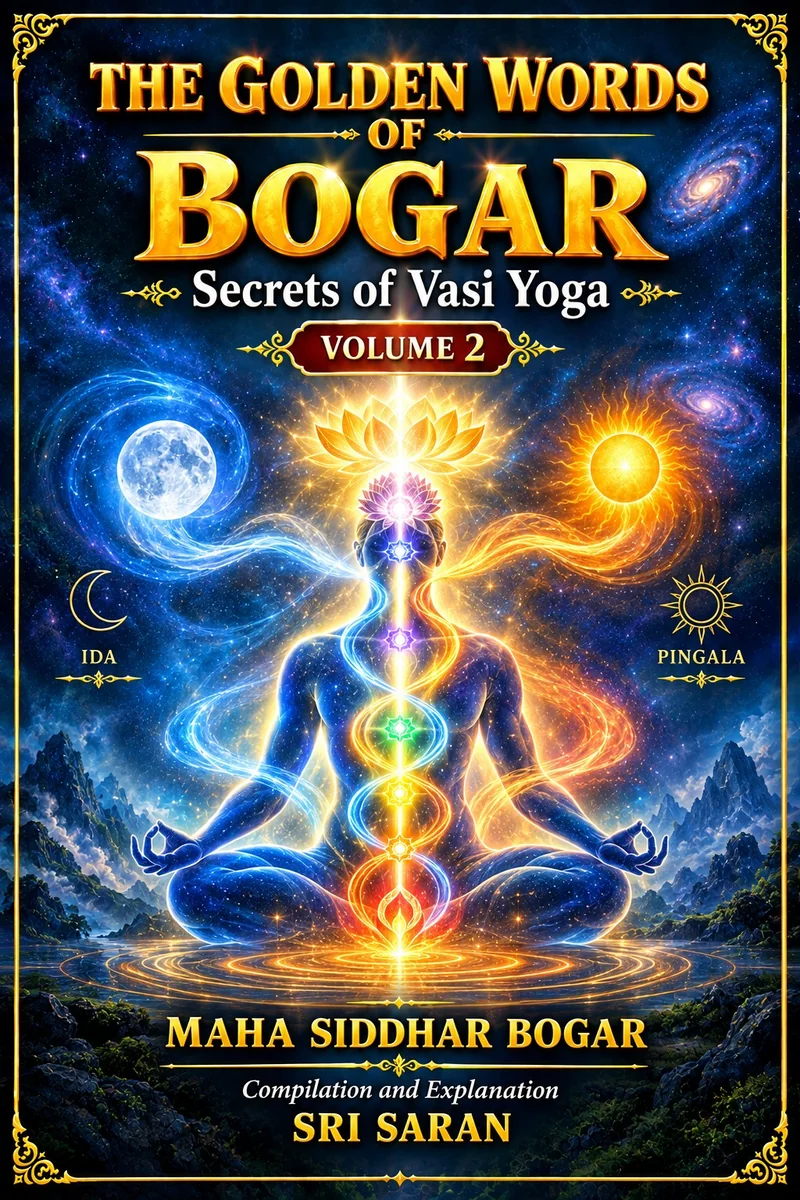
USD 14.99 per book
View catalogue & order →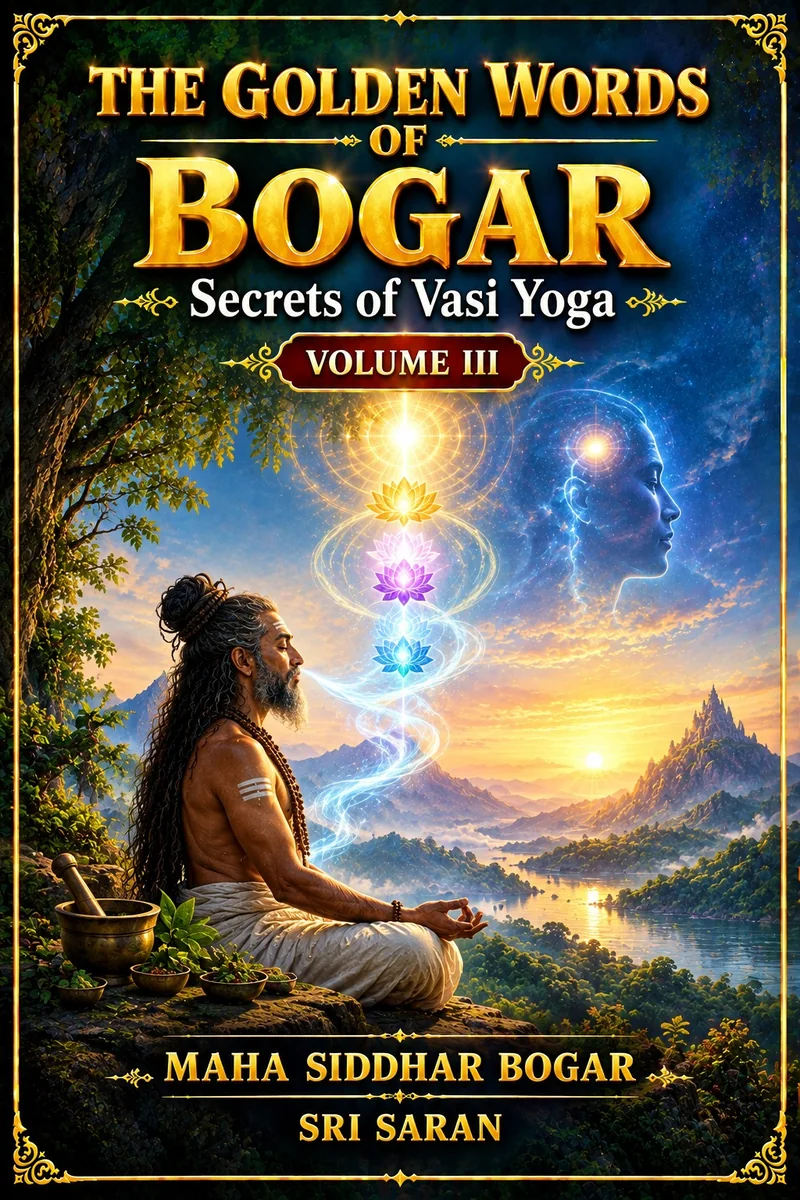
USD 14.99 per book
View catalogue & order →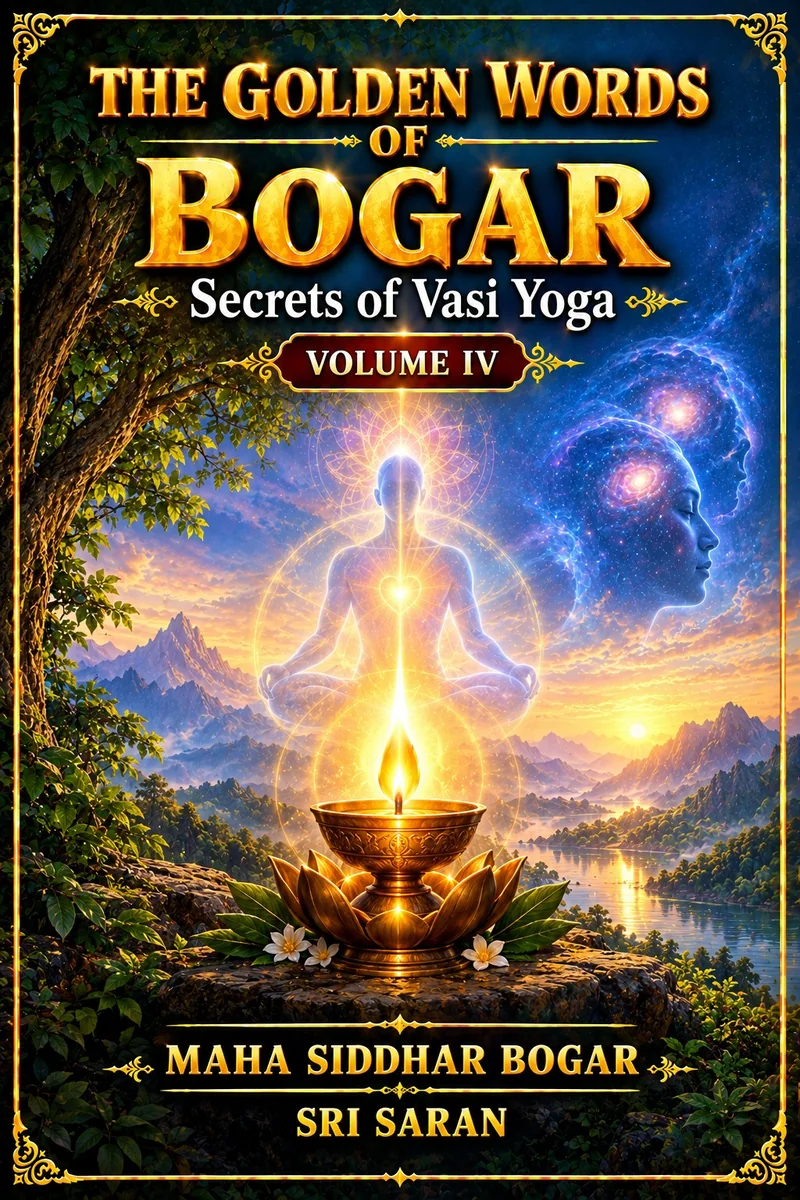
USD 14.99 per book
View catalogue & order →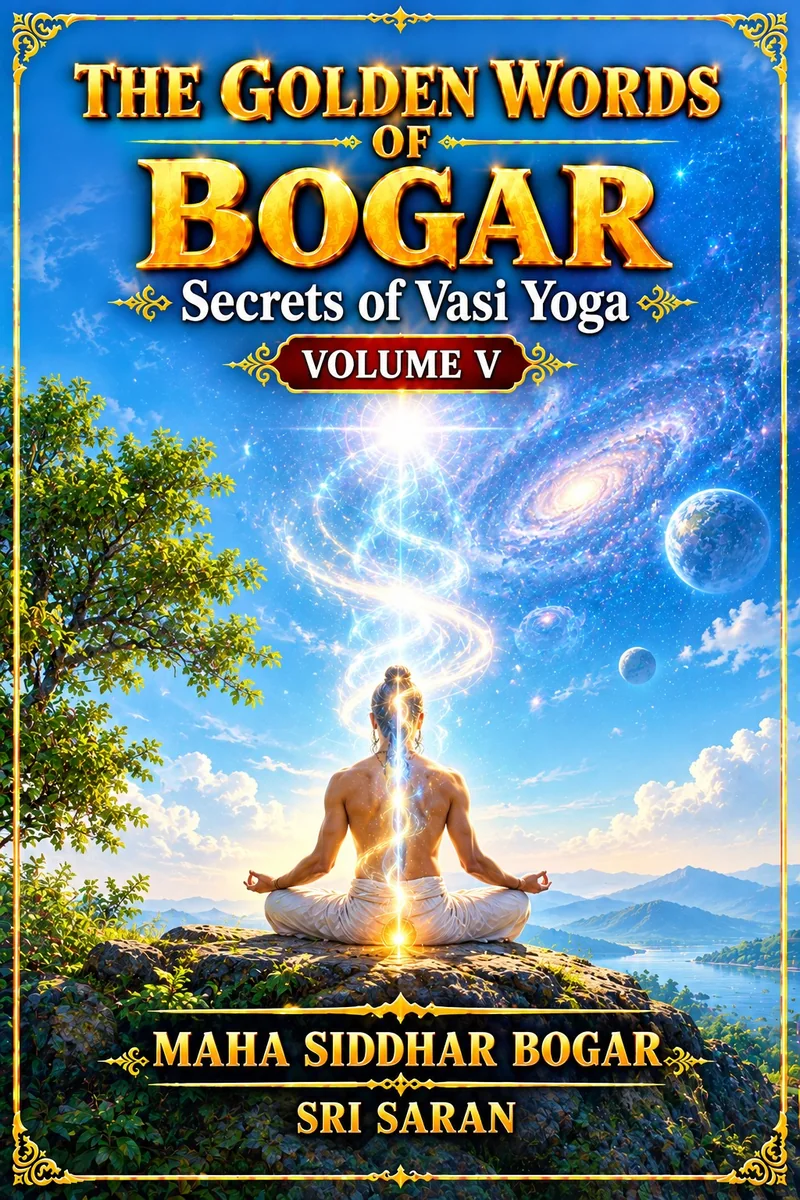
USD 14.99 per book
View catalogue & order →Drawing upon the profound teachings of Vasi Yoga contained in the Bhogar 7000, the sacred work bestowed by Lord Bhogar, the illustrious crown jewel among the Siddhars and an exalted master of spiritual wisdom, this five-volume series presents an extensive exploration of the yogic philosophy, spiritual disciplines, and wisdom traditions preserved by the Siddhars.
The Siddhar tradition regards Yoga not merely as a practice of physical postures, breath regulation, or mental concentration, but as a comprehensive path of inner transformation. It encompasses the investigation of the body, the life-force, the mind, and the deeper nature of existence, directing the sincere seeker towards self-inquiry, the transcendence of ego and attachment, and the realisation of Supreme Truth.
Within this sacred vision, Vasi Yoga occupies a significant place. Through the study of breath, the subtle Nadis, the Adhara Mandalas, the movements of the mind, and the principles of spiritual contemplation, the seeker is invited to turn attention inward and explore the profound relationship between individual existence and the universal Reality.
The five volumes have been arranged to unfold these teachings progressively, bringing together foundational practices, philosophical inquiry, traditional yogic concepts, and the higher aspirations of spiritual realisation.
The First Volume introduces the fundamental principles of Vasi Yoga, with particular emphasis on the movement of the breath, the relationship between breath and mind, the subtle channels known as Nadis, and the vital energy centres referred to as Adhara Mandalas.
These teachings establish the foundation for understanding how the regulation of breath and the cultivation of mental steadiness are associated with the inward journey of Yoga. By directing attention away from continual external distractions, the practitioner begins to cultivate concentration, inner tranquillity, and a deeper awareness of the self.
This volume lays the groundwork for understanding the more advanced yogic and philosophical teachings explored in the subsequent volumes.
The Second Volume explores the Siddhar understanding of the relationship between the macrocosm and the microcosm, expressed through the principle of Andam–Pindam. This perspective invites the seeker to investigate the correspondence between the universe and the individual human being.
The volume also examines the Siddhar tradition, Kayakalpa—the traditional discipline associated with bodily rejuvenation and longevity—and Rasavada, the ancient alchemical tradition.
Through these subjects, readers are introduced to the Siddhars' integrated vision of the body, nature, life-force, and spiritual knowledge. The teachings encourage a deeper examination of existence and the place of the human being within the greater order of the universe.
The Third Volume turns towards the inner dimensions of spiritual practice, emphasising Mauna Yoga, the discipline of silence, the unification of the mind, and the wisdom that emerges through sustained self-inquiry.
In the Siddhar tradition, silence signifies more than the absence of spoken words. It also points towards the quietening of unnecessary mental activity, the diminishing influence of ego and attachment, and the cultivation of clear awareness.
Through contemplation and inquiry into the nature of the self, the seeker is encouraged to look beyond superficial identities and changing experiences in pursuit of a deeper understanding of the Truth.
This volume highlights the importance of inner discipline, discernment, and direct inquiry in the maturation of spiritual wisdom.
The Fourth Volume explores the philosophical dimensions of the five primordial elements, known as Pancha Bhuta, the principles of sacred letters expressed through Akshara Tattva, and the states of Samadhi.
It further examines the relationship between Shiva and Shakti and the profound teachings associated with Parapara Jnana, the supreme wisdom of the Transcendent Absolute.
These subjects invite the reader to investigate the fundamental principles underlying manifestation, consciousness, and spiritual experience. The teachings also direct attention towards the limitations of ordinary perception and the possibility of transcending narrow identification with the body, mind, and individual ego.
The volume thus advances the inquiry from an understanding of the principles of existence towards the contemplation of the Supreme Reality.
The Fifth Volume brings together an extensive range of teachings concerning Vasi Yoga, Ashtanga Yoga, Pranayama, Kundalini, the Adhara Mandalas, Viswa Dhyana, Amrita Tattva, the destruction of the three impurities, and Kailasa Deha Siddhi.
It examines the traditional relationship between the regulation of breath, the harmonisation of vital energy, meditation, and the progressive refinement of awareness. The symbolism of the Agni Mandala, solar radiance, the Chandra Mandala, and divine nectar reveals important dimensions of the Siddhar understanding of inner transformation.
The volume also explores the states of Samadhi, the contemplation of Brahman, the significance of the Guru's grace, the Ashta Siddhis, and the spiritual aspiration associated with the attainment of the Kailasa Body.
Within the Siddhar tradition, these teachings express a comprehensive vision of Yoga in which bodily discipline, ethical conduct, mental steadiness, devotion, and philosophical inquiry are interconnected. Extraordinary attainments and descriptions of spiritual transformation are best approached in the context of the tradition's wider emphasis on wisdom, non-attachment, compassion, and the transcendence of ego.
The ultimate purpose is not merely the acquisition of powers or extraordinary experiences, but the deepening of understanding and the realisation of Supreme Truth.
Viewed as a whole, these five volumes present a continuous spiritual journey. The seeker begins by investigating the movement of the breath and its relationship with the mind. This leads towards an exploration of the human being in relation to the universe, followed by the cultivation of silence, concentration, and self-inquiry.
The journey then expands into the philosophical investigation of the elements, sacred sound, consciousness, Shiva–Shakti, and the Supreme Reality. Finally, the teachings of Vasi Yoga, Kundalini, meditation, Samadhi, divine nectar, and Kailasa Deha bring together the different dimensions of the Siddhar spiritual vision.
Throughout this journey, ethical discipline remains indispensable. Ahimsa, or non-violence; Satya, or truthfulness; compassion towards all living beings; restraint of desire; freedom from excessive attachment; devotion to the Guru; and sincere self-inquiry provide essential foundations for spiritual maturity.
The teachings also encourage a thoughtful approach to the symbolic language of the Siddhars. Concepts such as Nadis, Adharas, Kundalini, Amrita, Nada, and Samadhi possess layers of traditional spiritual and philosophical meaning. Their significance should be explored with care, without automatically equating traditional descriptions with established anatomical or scientific facts. Likewise, intensive breathing practices and prolonged breath retention require appropriate guidance from a qualified teacher.
The deeper message of the Siddhar tradition lies in the harmonious integration of practice, understanding, and wisdom. The regulation of breath helps gather the mind; the gathered mind becomes an instrument of inquiry; inquiry helps illuminate the nature of ego and attachment; and the pursuit of Truth opens the way towards a more profound understanding of existence.
These five volumes are offered to sincere seekers, students of Yoga, and readers interested in the philosophical and spiritual heritage of the Siddhars. They invite readers not merely to acquire knowledge of traditional teachings, but also to reflect upon their meaning and cultivate the ethical awareness, discernment, compassion, and inner discipline that give such knowledge its deeper significance.
May the sacred wisdom of Vasi Yoga continue to flourish.
May the light of True Spiritual Knowledge illumine all beings.
Glory to the sacred feet of Bogar Siddhar!